

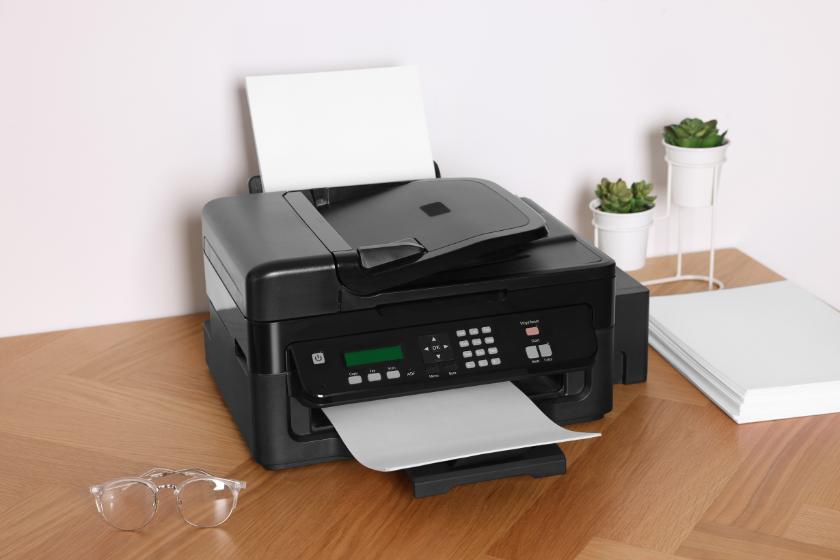

If you have ever clicked “Print,” waited for your document, and stared at a blank sheet sliding out of the tray, you have probably wondered, “Why is my printer printing blank pages?” It is one of the most common and frustrating printing problems, and the good news is that most causes are easy to identify and fix at home or in the office.
This guide covers blank-page troubleshooting for all major printer brands so you can fix the issue regardless of what you own. TCS Digital Solutions specializes in commercial color label printers — Epson, Afinia, Primera, QuickLabel, NeuraLabel, and TrojanLabel. If you purchased a label printer from us, our support team can help you directly.
-
 Quick Label QL-300 (120V) Toner CMYK Color Label Printer SKU: 1003-0000002$9,970.00
FREE SHIPPING over $199*
Orders before 12PM EST usually Ship Same Business Day - Epson ColorWorks C3500 Inkjet Color Label Printer SKU: C31CD54011 GTIN: 814420980046$2,419.00
FREE SHIPPING over $199*
Orders before 12PM EST usually Ship Same Business Day -
 Afinia L301 Small Business Color Label Printer SKU: 26849 GTIN: 678621130057$1,249.00
FREE SHIPPING over $199*
Orders before 12PM EST usually Ship Same Business Day
How a Printer Actually Puts Ink on Paper
Before troubleshooting, it helps to understand the printing process. An inkjet printer sprays liquid ink through tiny nozzles in a print head, while a laser printer uses heat and static charge to fuse powdered toner onto the page. The printer feeds the paper, lays down the image, and pushes the sheet out. If any link in that chain breaks, whether it is the cartridge, the print head, the driver, or the document itself, you end up holding a blank page. For a closer look at how cartridge design affects print output, see our guide on how much ink is in a printer cartridge.
Knowing this helps you narrow down the cause quickly instead of guessing.
Common Reasons Why a Printer Prints Blank Pages
Below are the most frequent culprits, listed in roughly the order you should check them.
1. Empty or Low Ink or Toner Cartridge
The most obvious reason is also the most common. If your cartridge is empty, nearly empty, or dried out from sitting unused for weeks, the printer has nothing to put on the paper. Inkjet ink dries out faster than laser toner, especially in warm or dry rooms. Our blog on how to keep printer ink from drying out covers practical storage and usage tips.
How to fix it:
- Open your printer’s control panel or desktop software and check the ink or toner status.
- If a cartridge reads low or empty, replace it with a genuine cartridge for your model. You can browse our full range on the printer ink cartridges page.
- After replacement, print a test page from the printer menu to confirm output.
Tip: Keep one spare cartridge on hand so a low warning does not interrupt your work.
2. Protective Tape Left on a New Cartridge
New cartridges ship with a plastic strip, vent plug, or sealing tape that blocks the ink or toner during shipping. If you forget to remove it, your printer will go through the motions of printing but deliver a completely blank sheet. Our walkthrough on how to put ink in a printer shows the correct installation sequence for Epson, Afinia, and VIPColor label printers.
How to fix it:
- Remove the cartridge carefully.
- Look for any colored tape, plastic tab, or sticker covering the nozzles or vent.
- Pull it off, give the cartridge a gentle shake (for inkjet) to settle the ink, and reinstall it.
3. Clogged Print Head
A clogged print head is one of the leading reasons an inkjet printer prints blank pages even when the cartridge is full. When a printer sits unused, ink can dry inside the nozzles and block the flow.
How to fix it:
- Open your printer’s maintenance menu, either on the device screen or through its desktop utility.
- Run the “Print Head Cleaning” or “Nozzle Cleaning” function.
- Print a nozzle check pattern to see if the lines are complete.
- If gaps remain, run the cleaning cycle one or two more times, but no more than three in a row, since each cycle uses ink.
If automatic cleaning does not work, you can clean the print head manually. Remove the print head as your manual describes, dampen a lint-free cloth with distilled water (not tap water), gently wipe the nozzle plate, let it air dry, and reinstall it. For very stubborn clogs, soaking the print head in warm distilled water for about ten minutes can clear hardened ink. The same dried-ink issue is often behind faded prints; see Why is my printer ink faded for related fixes.
4. Incorrect Cartridge Installation
Even a good cartridge can cause blank prints if it is not seated properly. The printer cannot read its chip or pull ink correctly, so the page comes out empty.
How to fix it:
- Turn the printer off.
- Open the cartridge access door.
- Remove each cartridge and check that no packaging remains.
- Press the cartridge back in until you hear or feel it click into place.
- Close the door, power on, and print a test page.
5. Air Bubbles in the Ink Cartridge
Inkjet cartridges can trap air bubbles that block ink flow, especially after refilling or shipping.
How to fix it:
- Remove the cartridge and tap it lightly against a flat surface, nozzle side up.
- Gently shake it from side to side to break the bubbles.
- Reinstall and run a nozzle check.
Some printers also include a “priming” function in the maintenance menu that pushes air out of the ink lines.
6. Outdated, Corrupted, or Missing Printer Drivers
Drivers are the bridge between your computer and the printer. If they are outdated, corrupted, or incompatible with your operating system after an update, print jobs may render as blank pages.
How to fix it:
- Visit the manufacturer’s official support site and search for your printer model: HP, Epson, Canon, or Brother.
- Download the latest driver for your version of Windows or macOS.
- Uninstall the existing driver first, then install the new one.
- Restart your computer and print a test page.
7. Wrong Print Settings
Settings such as the wrong paper size, “print blank pages,” draft mode, or grayscale on a color document can cause empty or near-empty output. Related settings issues can also stop color from printing entirely; see our guide on why my printer is not printing in color.
How to fix it:
- Open the print dialog box in your document.
- Confirm the correct printer is selected as the default.
- Match the paper size and type to the sheet in the tray (Letter, A4, photo, and so on).
- Turn off “draft” or “economy” mode for a normal test print.
- Make sure the color or grayscale matches your document.
8. Stuck Print Queue or Spooler Issue
A stuck print job can freeze the entire queue, causing the next page to print blank or nothing at all.
How to fix it (Windows):
- Open Control Panel, then Devices and Printers.
- Right-click your printer and choose “See what’s printing.”
- Cancel all pending jobs.
- If jobs will not clear, restart the Print Spooler service from Services in Windows.
How to fix it (Mac):
- Open System Settings, then Printers and Scanners.
- Select your printer and open the queue.
- Delete any stuck jobs, then try again.
9. Empty or Corrupted Document
Sometimes the printer is fine, and the document is the problem. A trailing blank page, hidden objects, or a corrupt PDF can produce empty output.
How to fix it:
- Open the file and scroll to the end to check for extra blank pages.
- Use “Print Preview” to see what the printer will produce.
- Re-save or re-download the file.
- Try printing a different document, such as a Notepad text file, to rule out a printer hardware issue.
10. Loose Cables or Weak Wireless Connection
If your USB cable is loose or your wireless printer is too far from the router, print commands may arrive incomplete, and the printer can spit out blank pages.
How to fix it:
- For wired printers, reseat the USB or Ethernet cable on both ends and try a different port.
- For wireless printers, run the printer’s wireless test report and confirm that both the printer and computer use the same Wi-Fi network.
- Move the printer closer to the router, or restart the router and printer.
11. Outdated Printer Firmware
Manufacturers release firmware updates to fix bugs that can cause printing issues, including blank pages. Older firmware can also conflict with new cartridges or operating systems. Open your printer’s settings menu and look for “Firmware Update,” or install the latest version from the official manufacturer’s support site.
Brand-Specific Fixes
HP Printers Printing Blank Pages
HP inkjet printers, including OfficeJet, Envy, and DeskJet models, often produce blank pages because of clogged print heads or driver conflicts. Open the HP Smart app and run the “Diagnose and Fix” tool (which replaced the retired HP Print and Scan Doctor in 2025), then run a print head cleaning. If the test page still prints blank, soak the integrated print head briefly in warm distilled water and let it dry before reinstalling.
Epson Printers Printing Blank Pages
Epson printers, especially EcoTank and XP models, are prone to dried ink after inactivity. Run the built-in “Power Cleaning” from the Epson printer utility if standard cleaning fails. For Epson ColorWorks label printers, our guide Why is my Epson printer not printing when the ink is full covers advanced fixes.
Canon Printers Printing Blank Pages
Canon PIXMA users should run a “Deep Cleaning” from the maintenance menu in the Canon IJ printer utility. Remove the orange protective cap from any new ink tank, and verify that the cartridges click firmly into place.
Brother Printers Printing Blank Pages
Brother inkjet and laser printers respond well to the “Test Print” and “Improve Print Quality” routines available through Brother Solutions Center. For laser models, check that the toner cartridge is properly seated. Our blog on why my toner cartridge is not working covers laser-specific issues in more detail.
Step-by-Step Quick Troubleshooting Checklist
If you only have a few minutes, run through this checklist in order:
- Check ink or toner levels and replace any empty cartridges.
- Inspect each cartridge for tape, plugs, or packaging.
- Reseat the cartridges until they click.
- Run the print head cleaning cycle once or twice.
- Print a nozzle check or test page.
- Verify paper size and quality settings.
- Clear stuck jobs from the print queue.
- Update or reinstall the printer driver.
- Restart the printer, computer, and Wi-Fi router.
- Update printer firmware.
Working through these steps in order resolves blank-page issues for most users without a service call.
How to Prevent Blank Pages Going Forward
Many printer problems are easier to prevent than to fix:
- Use your printer regularly. Printing at least one page a week keeps the ink moving and prevents nozzles from drying out.
- Store cartridges properly. Keep new cartridges sealed in their original packaging, away from heat and direct sunlight.
- Run a monthly cleaning cycle. A scheduled print head cleaning helps prevent clogs.
- Power down the right way. Always shut the printer off using its power button so the print head parks in its cap.
- Keep drivers and firmware current. Set updates to install automatically when possible.
- Buy quality consumables. Genuine cartridges reduce the risk of leaks, dried ink, and chip errors. For commercial label printers, our Epson printer ink cartridges collection covers the full ColorWorks lineup.
When to Consider Professional Help
TCS Digital Solutions specializes in commercial color label printers from Epson, Afinia, Primera, QuickLabel, NeuraLabel, and TrojanLabel. If you purchased a label printer from us, our technical support team can review the issue and recommend next steps during regular business hours. For HP, Canon, Brother, or other consumer printers, please contact the manufacturer’s support team directly. For customers who purchased a label printer from us, our technical support team can review the issue and recommend next steps during regular business hours.
A printer printing blank pages is rarely a sign of a dead machine. In most cases, a quick check of cartridges, settings, drivers, and the print head brings your printer back to producing crisp documents.
-
 NeuraLabel Callisto 12″ Wide Pigment Industrial Color Label Printer SKU: HW-CAL-LP$11,995.00
FREE SHIPPING over $199*
Orders before 12PM EST usually Ship Same Business Day -
 Primera LX3000 Color Label Printer with Big Ink, Pigment Ink SKU: LX3000-pigment$3,195.00
FREE SHIPPING over $199*
Orders before 12PM EST usually Ship Same Business Day -
 Epson ColorWorks CW-C6500P Gloss Color Inkjet Label Printer with Peel and Present SKU: C31CH77A9971$4,305.00
FREE SHIPPING over $199*
Orders before 12PM EST usually Ship Same Business Day
Final Thought
A blank page does not have to ruin your day. Once you understand the common causes, from empty cartridges and clogged nozzles to driver conflicts and stuck print queues, you can troubleshoot in minutes rather than hours. Bookmark this guide so the next time you find yourself dealing with a printer that keeps printing blank pages, you have a clear path to a fix and a healthier, longer-lasting printer.
For businesses that depend on color label printing, TCS Digital Solutions is an authorized reseller of Epson, Afinia, Primera, QuickLabel, NeuraLabel, and TrojanLabel commercial label printers. If you need help selecting the right color label printer, sourcing replacement ink, or troubleshooting an issue on a printer you bought from us, reach our team at orders@tcsdigitalsolutions.com or +1 (762) 208-6985. Don’t forget to explore our blog for additional guidance.
Frequently Asked Questions
Why Does My Printer Print Blank Pages Even When the Ink is Full?
Full ink levels do not always mean ink is flowing. The most likely causes are a clogged print head, an air bubble in the cartridge, or protective tape that was not removed from a new cartridge. Run a print head cleaning cycle and inspect the cartridge before assuming the ink is the issue.
Why is My Printer Printing Blank Pages After I Changed the Ink Cartridge?
New cartridges often come with sealing tape, a protective clip, or a plastic vent cover that must be removed. Take the cartridge out, check for any remaining packaging, give it a gentle shake, and reinstall it until it clicks firmly into place.
Why Does My Printer Print a Few Lines and Then Go Blank?
Partial prints usually point to a partially clogged print head or a cartridge running low on ink. Run a nozzle check, run one or two cleaning cycles, and replace the cartridge if levels are low.
Can a Connectivity Issue Cause My Printer to Print Blank Pages?
Yes. A weak wireless signal or a loose USB cable can interrupt the print job, leaving the printer to feed paper without printing data. Reseat cables, move closer to the router, and restart both devices.
How Often Should I Run a Print Head Cleaning?
For most home users, once a month is enough. Avoid running more than two cleaning cycles in a row, because each cycle uses ink.
Are Blank Pages More Common With Inkjet or Laser Printers?
Inkjet printers see blank pages more often because liquid ink dries out and clogs nozzles. Laser printers can also produce blank pages, usually due to an empty toner cartridge, a damaged drum, or a transfer roller issue.

