

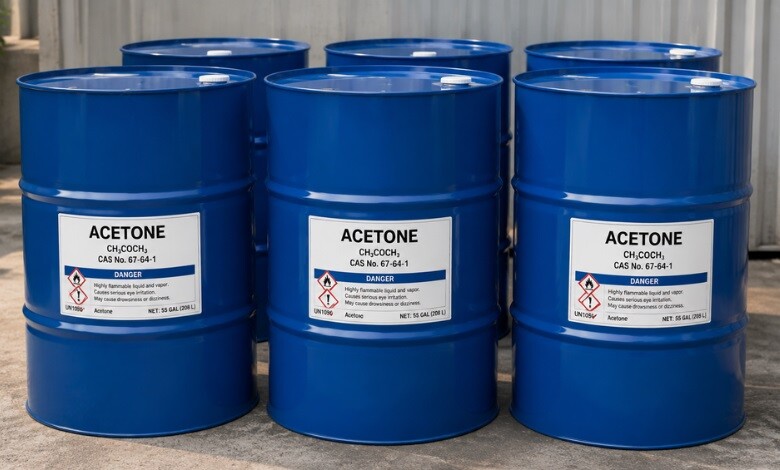
If you work around hazardous chemicals, understanding what a GHS label is is one of the most important things you can do to protect yourself, your team, and your business. GHS stands for the Globally Harmonized System of Classification and Labeling of Chemicals, an international framework developed by the United Nations to standardize the way chemical hazards are communicated around the world. In simpler terms, GHS refers to a unified global approach to chemical safety communication, and what GHS means in practice is a standardized label that every hazardous chemical container must carry so that workers, first responders, and consumers can immediately identify the risks involved and respond appropriately.
In this guide, you will learn exactly what a GHS label includes, how to read one, what products require them, and how to print GHS-compliant labels in-house for your facility.
-
 Primera LX600 Color Label Printer SKU: LX600$1,995.00
FREE SHIPPING over $199*
Orders before 12PM EST usually Ship Same Business Day - Epson C4000 / CW-C4000 ColorWorks Inkjet Label Printer (Gloss) SKU: C31CK03A9991$2,492.00
FREE SHIPPING over $199*
Orders before 12PM EST usually Ship Same Business Day -
 Afinia L801 Plus Commercial Color Label Printer SKU: 32498$8,850.00
FREE SHIPPING over $199*
Orders before 12PM EST usually Ship Same Business Day
What Is a GHS Label?
It is a standardized safety label required on containers of hazardous chemicals. The system was created by the United Nations and adopted by the United Nations so that anyone handling a chemical, regardless of language or country, can quickly understand its risks and take appropriate safety precautions.
The 6 Required GHS Label Elements
Under OSHA’s 29 CFR 1910.1200 Hazard Communication Standard, every primary GHS label applied to a shipped hazardous chemical container must include these six core elements:
- Product Identifier: The chemical name, code number, or batch number that clearly identifies the substance.
- Signal Word: Either ‘Danger’ (for the most severe hazards) or ‘Warning’ (for less severe hazards). Each label uses only one signal word.
- Hazard Statements: These are standardized descriptions that explain the nature and level of a chemical’s hazard, such as “Can cause severe skin burns and eye damage.
- Precautionary Statements: Instructions covering safe handling, storage, disposal, and first-aid steps if exposure occurs.
- Pictograms: These are the eight diamond-shaped symbols regulated by OSHA, each featuring a black hazard icon within a white background and a red border, representing various hazard categories.
- Supplier Information: This section provides the essential contact details, including the name, address, and phone number, of the chemical’s manufacturer, importer, or the designated responsible party.
Primary vs. Secondary GHS Labels: Primary labels go on shipped containers and must include all six elements. Secondary labels, also called workplace labels, are used on containers holding transferred chemicals and must display the product name along with appropriate hazard warnings, but do not require full supplier contact information.
GHS Pictograms: A Quick Reference
The eight OSHA-regulated GHS pictograms communicate specific hazard categories at a glance. Here is what each one means:
| Pictogram Symbol | Hazard Type |
| Flame | Flammable liquids, solids, gases, and self-reactive substances |
| Flame Over Circle | Oxidizers that may intensify fire or combustion |
| Exploding Bomb | Explosives, self-reactives, and organic peroxides |
| Skull and Crossbones | Acute toxicity (fatal or toxic if inhaled, swallowed, or absorbed through skin) |
| Exclamation Mark | Skin/eye irritants, skin sensitizers, and lower-level acute toxicity |
| Health Hazard | Carcinogens, respiratory sensitizers, reproductive toxins, and organ damage |
| Corrosion | Skin corrosion, serious eye damage, and corrosive to metals |
| Gas Cylinder | Gases stored under pressure |
Note: OSHA does not mandate the ninth GHS pictogram (Environment), though it may appear on labels for international chemical shipments.
What Is the Purpose of GHS?
The system was created to achieve three fundamental goals:
- Protect workers and consumers: Clear, standardized labels give everyone who handles a chemical the information needed to do so safely. According to OSHA, over 50,000 U.S. workers die from chemical exposures each year, and more than 190,000 suffer from exposure-related illnesses — numbers that proper GHS labeling is specifically designed to reduce.
- Support emergency responders: In the event of a spill, fire, or accident, first responders can immediately identify chemical hazards and apply the correct response without delay.
- Harmonize international trade: Before GHS, incompatible labeling systems created confusion, shipping delays, and safety risks. By standardizing chemical labels across 80+ adopting nations, GHS removes these barriers and makes global chemical commerce safer and more efficient.
Which Products Require a GHS Label?
Any substance classified as hazardous under OSHA’s HazCom Standard or EPA regulations must carry a GHS label. Common categories include:
- Industrial chemicals and solvents
- Commercial and household cleaning agents
- Paints, coatings, and adhesives
- Pesticides, herbicides, and fungicides
- Laboratory reagents and chemical compounds
- Fuels, lubricants, and petroleum products
- Mixtures containing any classified hazardous substance
Multiple agencies share oversight: OSHA governs workplace chemical safety, the EPA handles pesticides, the CPSC covers consumer products, and the FDA regulates cosmetics and drugs. The legal responsibility for determining whether a product requires a GHS label falls on the manufacturer or importer — when there is any doubt, the standard guidance is to label the product.
GHS Labels and Safety Data Sheets: How They Work Together
GHS labels and Safety Data Sheets (SDS) are two required and complementary components of OSHA’s Hazard Communication Standard. A GHS label delivers at-a-glance safety information directly on the chemical container using the six standard elements. An SDS goes deeper, providing a comprehensive 16-section document that covers everything from first-aid measures and firefighting instructions to storage requirements and disposal methods.
Both are mandatory under OSHA HazCom 29 CFR 1910.1200. Employers must ensure that Safety Data Sheets (SDS) are easily accessible in areas where hazardous chemicals are handled, and that employees are properly trained to understand both labels and SDSs effectively.
How to Print GHS Labels: In-House Printing with TCS Digital Solutions
Understanding your GHS label requirements is only half the equation; the other half is making sure your labels are printed on materials that hold up to real-world chemical environments. Standard office printers simply do not meet OSHA’s durability standards. GHS labels must remain legible throughout a product’s entire use lifecycle, resisting chemical splashes, UV exposure, moisture, and abrasion.
The most effective solution for businesses printing GHS labels is pigment-based inkjet printing on synthetic substrates such as BOPP or PET. This combination produces labels that are water-resistant, chemical-resistant, and on select certified media compliant with BS 5609, the international standard required for chemical drums shipped by sea.
Printing GHS labels in-house with the right equipment gives your operation several key advantages:
- On-demand label production — print exactly what you need, when you need it
- Immediate compliance updates — update a label the same day a formula or regulation changes
- No minimum order requirements — avoid costly pre-printed label stock that becomes obsolete
- Significant cost savings — eliminate setup fees, rush charges, and shipping costs
- Full design control — modify, rebrand, or customize labels in-house in minutes
At TCS Digital Solutions, we carry the most trusted GHS label printer brands in the industry, each evaluated and tested for GHS compliance and chemical label durability:
- Epson ColorWorks (C4000, C6000, C6500, C8000): UltraChrome DL pigment inks deliver chemical and water resistance; BS 5609 certified on select media for marine-grade GHS compliance.
- Afinia Label Printers (L502, L701, L801, L901 series): Pigment ink options for durable, full-color GHS labels across small-to-commercial production volumes.
- QuickLabel Printers (QL-120D, QL-120X, QL-300): Fast, on-demand inkjet and toner label printing for short-run and high-SKU chemical labeling operations.
- Primera Label Printers (LX3000 Pigment Edition): Compact and cost-effective, ideal for growing businesses entering in-house GHS label production.
- NeuraLabel Callisto: High-speed commercial inkjet printer capable of producing BS 5609-compliant GHS labels for drums, totes, and bins at up to 90 feet per minute.
Not sure which GHS label printer is right for your operation? Our certified consultants at TCS Digital Solutions will evaluate your label volume, container sizes, chemical exposure requirements, and compliance needs to recommend the perfect solution. Explore our full range of GHS label printers or contact us today to get started.
- Quick Label QL-300 (120V) Toner CMYK Color Label Printer SKU: 1003-0000002$9,970.00
FREE SHIPPING over $199*
Orders before 12PM EST usually Ship Same Business Day - Quick Label QL-300s (120V) Toner CMYK + White Color Label Printer SKU: 1003-0000004$13,120.00
FREE SHIPPING over $199*
Orders before 12PM EST usually Ship Same Business Day - Epson ColorWorks C3500 Inkjet Color Label Printer SKU: C31CD54011 GTIN: 814420980046$2,492.00
FREE SHIPPING over $199*
Orders before 12PM EST usually Ship Same Business Day
Stay Compliant. Print with Confidence.
GHS labels are a legal requirement, a worker safety tool, and a global communication standard all in one. With OSHA’s 2024 update aligning U.S. standards with the 7th Edition of the GHS, there has never been a better time to review your chemical labeling process, from understanding what every element on your label means to ensuring your labels are printed on materials that can actually survive the environments they operate in.
Have more questions about GHS labels or printers? Contact our support team via email at orders@tcsdigitalsolutions.com or call +1 (762) 208-6985 for assistance. The TCS Digital Solutions Expert Support Team will be happy to help you with setup, troubleshooting, and product guidance. To know more about printer setup, maintenance, and label printing best practices, visit our blog section and find answers to all your questions.

