

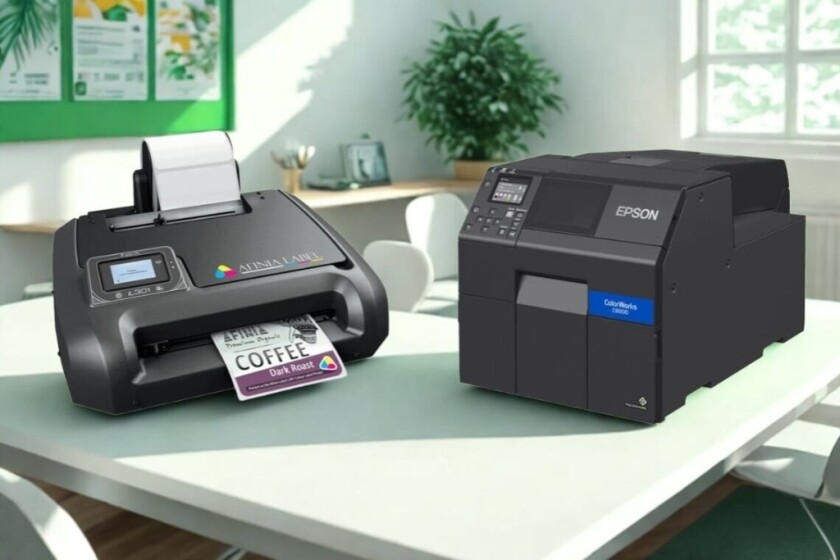
Deciding between a thermal printer and an inkjet printer is crucial when setting up a printing system for your business. Both types serve different needs, and choosing the wrong one can impact your operations, efficiency, and budget. Whether you’re in retail, managing inventory, or running an e-commerce operation, understanding the differences will help you make the best investment from the start.
This guide breaks down everything you need to know, from how each printer works to how they compare on speed, cost, Quality, and long-term value.
What Is a Thermal Printer?
Thermal printers utilize heat to imprint images and text onto specially treated materials. This process utilizes two main techniques.
Direct Thermal Printing involves applying heat to heat-sensitive paper, creating a chemical reaction that darkens specific areas to form images and text. This technique eliminates the need for ink, toner, or ribbons. It’s commonly used for printing shipping labels, receipts, and barcodes. However, the prints may become less legible over time, especially when subjected to heat, light, or physical wear.
Thermal Transfer Printing uses a heated printhead to apply ink from a wax or resin ribbon onto the label material. This method produces highly durable, smudge-resistant output that stands up to harsh environments, making it the go-to choice for product labels, asset tags, and outdoor signage.
Key advantages of thermal printers include:
- Direct thermal printing does not require ink or toner cartridges.
- Print speeds of 4 to 10 inches per second (IPS)
- Low maintenance and fewer moving parts
- Primarily monochrome output
- Compact, purpose-built designs for labels and receipts.
-
 Epson ColorWorks CW-C6000A Matte Color Inkjet Label Printer with Auto Cutter SKU: C31CH76A9981$3,059.00
FREE SHIPPING over $199*
Orders before 12PM EST usually Ship Same Business Day -
 Epson ColorWorks CW-C6000P Gloss Color Inkjet Label Printer with Auto Peel and Present SKU: C31CH76A9971$3,898.00
FREE SHIPPING over $199*
Orders before 12PM EST usually Ship Same Business Day -
 Epson ColorWorks C3500 Inkjet Color Label Printer SKU: C31CD54011 GTIN: 814420980046$2,419.00
FREE SHIPPING over $199*
Orders before 12PM EST usually Ship Same Business Day
What Is an Inkjet Printer?
In contrast, inkjet printers function by ejecting microscopic droplets of liquid ink onto various types of paper or label materials. These printers are highly adaptable, handling media like glossy paper, plain paper, and fabric.
Key features of inkjet printers include:
- Full-color printing with CMYK ink systems
- Inkjet printers offer high-resolution printing (up to 1,200 DPI or higher).
- Wider media compatibility
- Higher ongoing ink costs
- Printhead clogging if left unused for extended periods
Inkjet printers are the standard choice for offices, graphic designers, and businesses that produce color marketing materials, photo prints, or general-purpose documents.
Thermal Printer vs Inkjet: Head-to-Head Comparison
Here is how these two technologies stack up across the metrics that matter most to businesses:
| Feature | Thermal Printer | Inkjet Printer |
| Print Speed | 4-10 IPS (very fast) | 15-20 ppm (moderate) |
| Print Quality | Sharp monochrome | High-resolution color |
| Color Printing | Limited (transfer only) | Full color (CMYK) |
| Ink/Consumables | None (direct) or ribbon | Ink cartridges |
| Cost Per Label | Very low | Moderate to high |
| Maintenance | Minimal | Regular (heads clog) |
| Media Types | Labels, receipt rolls | paper, photo, cardstock |
| Durability | High (transfer) / Moderate (direct) | Moderate |
| Best For | Labels, receipts, barcodes | Documents, photos, marketing |
1. Print Speed
Speed is one of the most critical factors for high-volume printing operations. Thermal printers excel here. A typical thermal label printer operates at 4 to 10 inches per second, which translates to hundreds of labels per minute in a logistics setting. For high-volume printing in warehouses, thermal printers are essential due to their speed.
Inkjet printers, while capable of 15 to 20 pages per minute for standard documents, slow down significantly when printing high-resolution color content or large graphics. For occasional office printing, this is rarely a problem. For high-volume label production, it becomes a serious bottleneck.
Verdict: Thermal printers win on speed for label and receipt printing. Inkjet printers are adequate for moderate document volume.
2. Print Quality
The Quality of output varies between thermal and inkjet printers, depending on the specific application. Thermal printers produce sharp, precise monochrome output that is ideal for barcodes, QR codes, and text-based labels. Most direct thermal printers achieve 203 to 300 DPI, which is more than sufficient for scannable barcodes and shipping labels.
Inkjet printers outperform thermal printers significantly in color depth and photographic detail. With resolutions of 600 to 4,800 DPI and full CMYK color capability, inkjet printers are the clear choice for product photography, promotional flyers, marketing brochures, and color-coded labels.
Verdict: Inkjet wins on color and photo quality. Thermal wins on monochrome label sharpness and scan reliability.
3. Cost: Upfront vs. Long-Term
Cost comparison between inkjet and thermal printer models must account for both the purchase price and ongoing consumables.
Device Cost: Entry-level inkjet printers are available for as little as $50 to $150, making them attractive in price. Thermal label printers typically range from $80 to $500, depending on print width and speed. Thermal printers might come with a higher initial cost, but their long-term maintenance and operational costs are typically lower.
Consumable Cost: This is where the real difference lies. Inkjet printers require regular ink cartridge replacements, and ink costs add up fast, especially for high-volume printing. A single set of replacement cartridges can cost $30 to $80 or more, and businesses that print frequently replace cartridges monthly.
Thermal printers eliminate ink costs for direct thermal models entirely. The only recurring cost for thermal printers is the paper or labels required. For thermal transfer models, wax or resin ribbons are needed, but their per-print cost is still typically lower than that of inkjet ink.
Verdict: Thermal printers offer a lower total cost of ownership for businesses with regular or high-volume label and receipt printing needs.
4. Maintenance and Durability
Thermal printers require minimal maintenance. With no ink to dry out, no cartridges to replace, and fewer moving parts, they are designed for continuous, high-volume operation. Routine care involves occasional printhead cleaning and replacing the label roll or ribbon.
Inkjet printers may experience clogging issues if they remain unused for extended periods. Many inkjet printers run automatic cleaning cycles, which consume ink even when you are not printing. In high-humidity or dusty environments, inkjet performance degrades more readily.
As for print durability, thermal transfer prints are highly resistant to moisture, chemicals, and abrasion, making them suitable for outdoor labels, cold-storage tags, and industrial environments. Direct thermal prints are more vulnerable to heat and UV exposure. Inkjet prints on standard paper can smear if wet and may fade over time without UV-resistant inks.
Verdict: Thermal printers win on maintenance simplicity and operational reliability. Thermal transfer labels win on long-term print durability.
5. Use Cases: Which Printer Fits Which Business?
Choose a thermal printer for businesses that involve:
- Shipping and logistics (FedEx, UPS, USPS labels)
- Retail point-of-sale receipts
- Warehouse inventory and barcode labels
- Food and beverage product labels
- Healthcare wristbands and prescription labels
- E-commerce fulfillment (order volumes over 50 per day)
Choose an inkjet printer if your business involves:
- Full-color product labels with photos or gradients.
- Marketing materials, like brochures, posters, and flyers.
- Office document printing (contracts, reports, invoices)
- Photo printing and creative design output
- General-purpose, low-volume printing.
Can a Thermal Printer Print in Color?
This is a common question when businesses first explore the thermal printer vs inkjet printer comparison. Most thermal printers produce only monochrome (black) prints. However, some advanced thermal transfer printers support multi-color printing using specialized color ribbons, though the color range is limited compared to inkjet.
For full-color label printing with rich graphics, color inkjet label printers such as the Epson ColorWorks series are a purpose-built option that bridges the gap between both technologies.
Which Printer Should You Buy?
The thermal vs inkjet printer debate does not have a universal winner because both technologies serve different needs. For businesses that prioritize speed, low running costs, and reliability for labels, barcodes, and receipts, a thermal printer is the clear choice. For businesses that need vibrant color output for marketing materials, photos, or full-color product labels, an inkjet printer delivers results that thermal technology cannot match.
If your primary use case involves printing shipping labels, retail receipts, or inventory tags at any volume, a thermal label printer will save you money and time in the long run.
TCS Digital Solutions provides a broad range of inkjet label printers designed to meet diverse business requirements. Browse our collection or reach out to our team for personalized recommendations.
- Afinia LT5C CMYK + White Label Printer SKU: 36138$12,850.00
FREE SHIPPING over $199*
Orders before 12PM EST usually Ship Same Business Day -
 Afinia L901 Plus Industrial Inline Color Label Printer SKU: 32344 GTIN: 678621130200$14,250.00
FREE SHIPPING over $199*
Orders before 12PM EST usually Ship Same Business Day -
 Afinia L301 Small Business Color Label Printer SKU: 26849 GTIN: 678621130057$1,249.00
FREE SHIPPING over $199*
Orders before 12PM EST usually Ship Same Business Day
Final Thoughts.
Ultimately, the right printer for your business depends on its day-to-day printing demands. When you are processing high volumes of shipping labels, receipts, or barcodes and want a low-maintenance, cost-efficient solution, a thermal printer is built precisely for that workflow. If your business depends on vibrant color output for product packaging, marketing collateral, or custom labels with detailed graphics, an inkjet printer gives you the color range and print resolution to deliver professional results.
The thermal printer vs inkjet debate ultimately points to this: neither printer is universally better. The best choice is the one that aligns with your print volume, media requirements, and long-term operating budget.
Need more clarification on Thermal Printer vs Inkjet? Reach us via email at orders@tcsdigitalsolutions.com or call +1 (762) 208-6985. Our TCS Digital Solutions support team is eager to assist. Visit our blog for additional information on printer ink cartridges.
Frequently Asked Questions
Is a Thermal Printer Better Than an Inkjet Printer for Shipping Labels?
Yes, thermal printers are much faster, more cost-effective, and dependable for high-volume label printing. They eliminate ink costs and produce smudge-proof output compatible with all major carrier scan systems.
Why Do Thermal Printers Not Need Ink?
Direct thermal printers rely on heat-sensitive paper that darkens under the printhead’s heat, eliminating the need for ink or toner entirely. Thermal transfer printers use a ribbon, but this is a dry process that is still separate from liquid inkjet printing.
What Are the Disadvantages of a Thermal Printer?
The main drawbacks are limited color capability, sensitivity to heat and UV light (for direct thermal), and the requirement for specialized media. They are not well-suited for printing photographs or full-color marketing materials.
Can I Print Color Labels on an Inkjet Printer?
Yes. Color inkjet label printers are an excellent choice for producing full-color product labels with photos, gradients, and branding elements. They offer higher color quality than most thermal color options.
Which is Cheaper to Run, a Thermal Printer or an Inkjet Printer?
For label and receipt printing, thermal printers are generally cheaper to run because they eliminate ink cartridge costs. For general office document printing at low volumes, inkjet printers with high-yield cartridges can be cost-competitive.
Related Articles

