

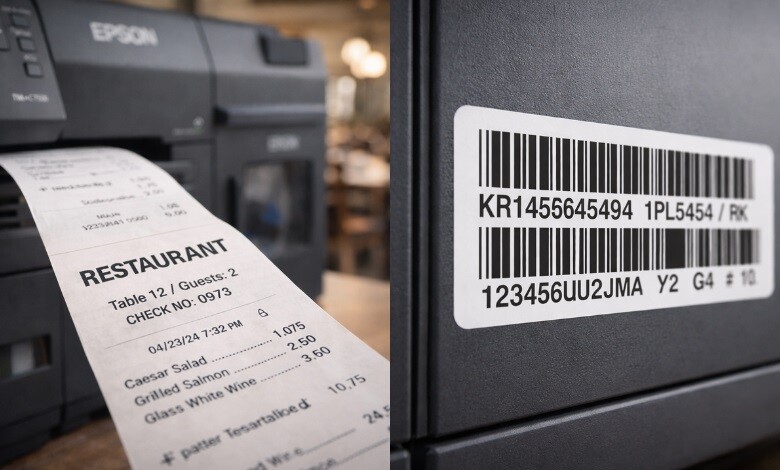
When choosing between printing labels, tags, and receipts, it’s essential to understand the distinctions between direct thermal and thermal transfer printing. By recognizing the differences between these methods, you can select the technology that best suits your needs. In this article, we’re going to break down the differences between Direct Thermal vs Thermal Transfer: What is the difference? Gaining this insight will enable you to make a well-informed decision about your label printing solutions.
-
 Afinia LT5C CMYK + White Label Printer SKU: 36138$12,850.00
FREE SHIPPING over $199*
Orders before 12PM EST usually Ship Same Business Day -
 Epson ColorWorks CW-C6500A Gloss Color Inkjet Label Printer with Auto Cutter SKU: C31CH77A9991$3,965.00
FREE SHIPPING over $199*
Orders before 12PM EST usually Ship Same Business Day -
 Epson ColorWorks CW-C6000P Gloss Color Inkjet Label Printer with Auto Peel and Present SKU: C31CH76A9971$3,898.00
FREE SHIPPING over $199*
Orders before 12PM EST usually Ship Same Business Day
What is Thermal Transfer Printing?
Thermal transfer printing uses a ribbon that, when heated, transfers ink onto the label surface, creating a durable print. This method requires a special ribbon (a thermal transfer ribbon) that works in combination with a thermal printhead and label stock. The heat generated by the printhead activates the ribbon and transfers ink to the label, creating a durable, long-lasting image.
Thermal transfer printing is often used for labels that need to withstand harsh conditions, like outdoor elements or prolonged exposure to chemicals. Thanks to its long-lasting nature, thermal transfer printing is commonly used across industries like logistics, retail, and manufacturing, where durability is crucial.
What is the Difference Between Direct Thermal & Thermal Transfer?
At its core, Direct Thermal vs Thermal Transfer involves the method of printing.
Direct Thermal Printing
With direct thermal printing, you don’t need a ribbon. Rather than using a ribbon, the printer applies heat directly to a special heat-sensitive label, causing it to darken and form the print. The image or text appears without any ink or ribbon involved. Direct thermal printing is typically faster, as it only requires a printhead and heat-sensitive material.
While direct thermal printing is cost-effective and efficient, it has some drawbacks. Direct thermal prints can gradually fade, especially when exposed to heat or sunlight over an extended period. This makes direct thermal printing more suitable for short-term uses like shipping labels, tickets, and receipts.
Thermal Transfer Printing
Thermal transfer printing requires the use of a ribbon that is heated, allowing ink to transfer onto the label surface. This method yields more durable, smudge-resistant, and long-lasting prints, making it ideal for industrial and outdoor labeling needs.
The key difference is that thermal transfer printing is more versatile and can be used for a wider variety of applications than direct thermal, including labels that need to withstand exposure to chemicals, moisture, and sunlight.
What is a Thermal Transfer Ribbon?
The thermal transfer ribbon plays a vital role in the thermal transfer process, facilitating ink transfer onto the label. It consists of four key layers that work together to transfer ink onto the label.
- Ink Layer: This is the layer that contains the ink and forms the printed image on the label.
- Primer: This layer bonds the ink to the base film.
- Base Film: usually made of PET (Polyethylene Terephthalate), it is the material that holds the ink during the transfer process.
- Back-Coat: A lubricating agent that helps protect the printhead from wear and tear during the printing process.
Selecting the correct ribbon is essential for achieving superior print quality and maximizing the lifespan of your printhead.
Thermal Ribbons Come in Three Main Types, Each Offering Particular Benefits Depending on the Specific Application.
Each thermal ribbon formulation serves a different purpose, depending on the application. Let’s take a deeper look at the three main types of thermal transfer ribbons and how they’re best used:
Wax (or Resin Enhanced Wax)
- Best for: High-speed printing
- Benefits: Produces dark, durable images that can be printed on flood-coated labels
- Usage: Most commonly used (about 75% of the time)
- Pros: Fast printing, ideal for most general labeling tasks
Wax/Resin
- Best for: Versatility
- Benefits: Works on a wide variety of label stocks, offering enhanced scratch and smudge resistance
- Cons: Requires more heat than the wax ribbon.
- Pros: Suitable for a range of labeling applications that require durability
Resin
- Best for: High-durability applications
- Benefits: Ideal for printing on a wide range of substrates, including those exposed to harsh conditions
- Heat resistance: Can handle temperatures exceeding 250°F
- Pros: Extremely durable, excellent for barcodes and variable images
Questions You Should Ask Your Customer When Choosing a Thermal Transfer Ribbon
To choose the most suitable thermal transfer ribbon for your needs, ask yourself the following questions:
- What make and model is the thermal printer you’re using?
- What type of labeling task are you working on, and what are your desired outcomes?
- What are the label’s size and material composition?
- Are you currently using a wax, wax/resin, or resin ribbon?
- How often are labels being used – daily, weekly, or monthly?
These questions help narrow down the best ribbon choice for the specific application and printer being used.
Where Can You Get a Label Printer?
If you’re looking to upgrade or purchase a label printer, TCS Digital Solutions offers a variety of label printers that can suit any need. We recognize the importance of choosing the right printer to fulfill your business’s labeling demands effectively. Visit TCS Digital Solutions to check out our range of label printers, including the color label printer for premium printing solutions. Our expert team is here to guide you in selecting the best printer suited to your unique requirements.
-
 Epson ColorWorks C8000 Gloss Inkjet Color Label Printer SKU: C31CL02A9991$9,630.00
FREE SHIPPING over $199*
Orders before 12PM EST usually Ship Same Business Day - Epson C4000 / CW-C4000 ColorWorks Inkjet Label Printer (Gloss) SKU: C31CK03A9991$2,492.00
FREE SHIPPING over $199*
Orders before 12PM EST usually Ship Same Business Day -
 Epson ColorWorks CW-C6500P Gloss Color Inkjet Label Printer with Peel and Present SKU: C31CH77A9971$3,805.00
FREE SHIPPING over $199*
Orders before 12PM EST usually Ship Same Business Day
Final Takeaway
Choosing between direct thermal and thermal transfer depends on your printing needs. If you need short-term, cost-effective labels and your printout won’t face prolonged exposure to harsh conditions, direct thermal printing might be your go-to option. However, if durability and high-quality prints are more important for your application, thermal transfer printing is the better choice. Every printing method offers its own set of benefits, making it crucial to evaluate what your business truly needs before making a final decision.
Have More Questions related to Direct Thermal vs Thermal Transfer? Contact our support team via email at orders@tcsdigitalsolutions.com or call +1 (762) 208-6985 for clarification. The TCS Digital Solutions Expert Support Team will be happy to assist you. To learn more about label printers, visit our blog section and get answers to all your questions.

